

Best Travel Accessories for Anxious Pets
Last Updated: November 22, 2026
Quick Summary
The best travel accessories for anxious pets are gear that reduces uncertainty: a properly fitted carrier with mesh on at least three sides and metal clips or locking zippers, plus a secured car seat, hammock, or barrier matched to your pet's trigger. Add familiar bedding and acclimation sessions before the trip.
- Measure your pet's length nose to tail base and add two inches for carrier fit.
- Look for mesh panels on at least three sides for ventilation.
- Match the car restraint to the trigger: rigid booster, hammock, covered carrier, or barrier.
- Run three short engine-off sessions in the parked car with treats before driving.
- Never give a pet a new supplement or medication for the first time on travel day.
Table of Contents
- What to Look for in Travel Gear for Anxious Pets
- Best Dog Carrier for Anxious Dogs: Backpacks and Totes That Feel Secure
- Car Seats, Boosters, and Hammocks That Keep Nervous Riders Steady
- How to Calm a Dog in the Car Before and During the Drive
- Calming Products for Dogs While Traveling: What the Evidence Says
- Traveling With an Anxious Cat: Carriers, Strollers, and Low-Stress Setups
- Strollers and Mobility Gear for Pets Who Need a Slower Pace
- Build Your Anxious Pet's Travel Kit at Furtastic
- Frequently Asked Questions
What to Look for in Travel Gear for Anxious Pets
The best travel accessories for anxious pets are the ones that reduce uncertainty, not just the ones that look nice in a shopping cart.
Three criteria matter more than anything else on the box.
Fit. A carrier that's too large lets a nervous pet slide around, which amplifies stress. Measure your pet's length nose to tail base and add two inches.
Ventilation. Mesh on multiple sides keeps air moving and lets your pet see out without feeling exposed. Look for mesh panels on at least three sides.
Secure closures. Metal clips and locking zippers beat plastic snaps every time.
| Criterion | What to Check | Why It Matters for Anxious Pets |
|---|---|---|
| Fit | Measured length plus 2 inches | Prevents sliding and scrambling |
| Ventilation | Mesh on 3+ sides | Reduces overheating and panic |
| Closures | Metal clips, locking zippers | Stops escape attempts |
| Stability | Rigid or padded base | Feels grounded, not wobbly |
| Cleaning | Removable, washable pad | Familiar scent stays intact |
Best Dog Carrier for Anxious Dogs: Backpacks and Totes That Feel Secure
For a nervous dog, a carrier works best when it hugs the body and keeps your hands free to steady it. Our Soft Side Dog Carrier Backpack for Small Breeds Airline Approved ($66.99) is a strong option for small dogs.
If your dog prefers being carried close, the Winter Fleece Dog Carrier Tote Bag With Harness Clip ($73.99) has a cotton interior, water-resistant nylon exterior, and a U-shaped opening so your dog can watch the world go by. Metal anti-escape clips add a second layer of security.
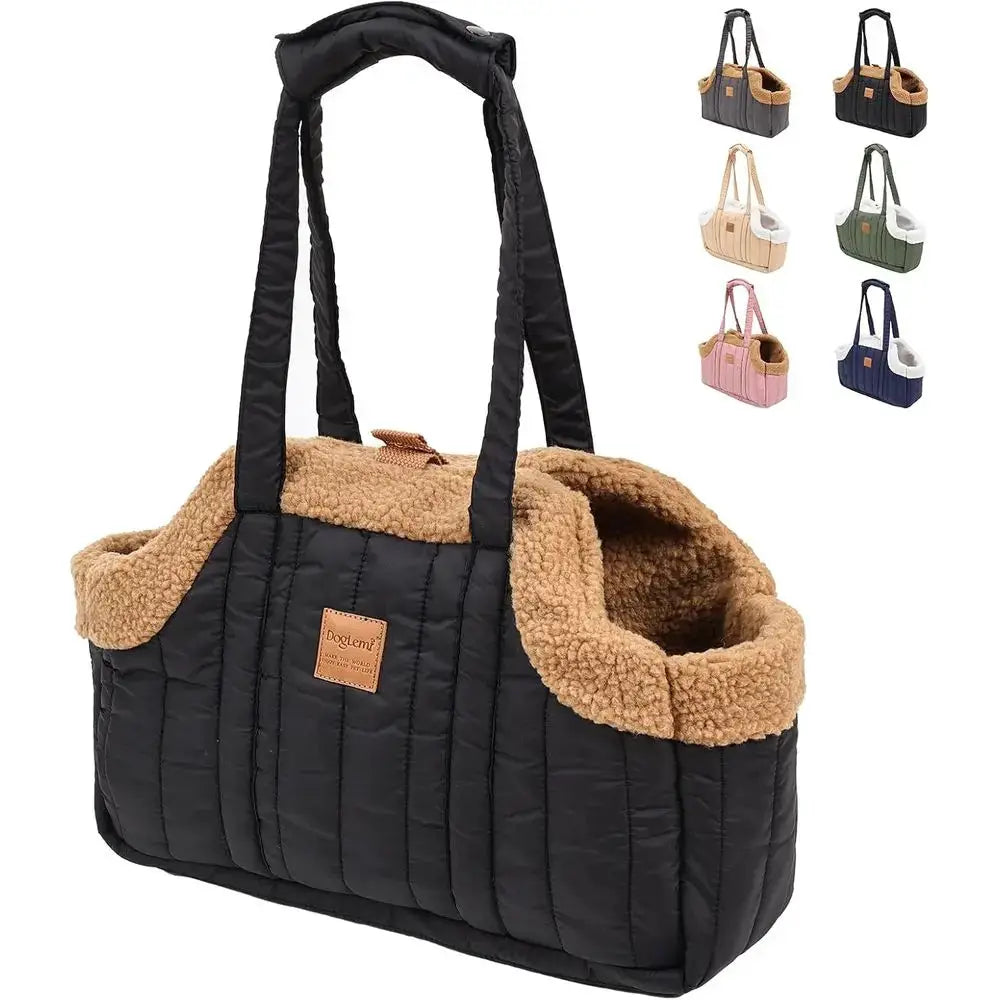
Best for: small dogs under 12 lb who settle when held close. Skip if: your dog is over 12 lb or panics when restricted.
Prices of travel gear for anxious pets
Car Seats, Boosters, and Hammocks That Keep Nervous Riders Steady
A steady dog is a calmer dog. Car anxiety often starts with sliding, and a fixed seat solves more of it than any calming spray will. But "fixed" means different things depending on how your dog reacts, so match the restraint to the trigger rather than buying the first booster you see.
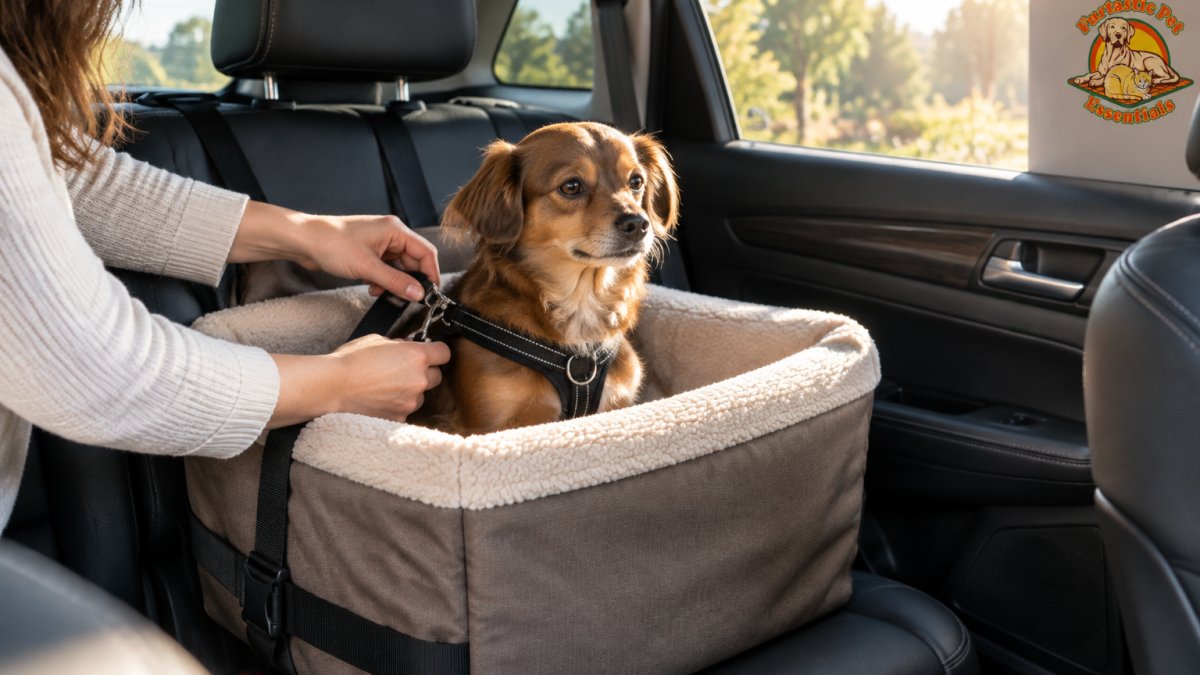
Match the restraint to the anxiety trigger
- Slides and scrambles on turns: a booster with a rigid base and a tether that clips to a harness, not a collar.
- Paces, pants, or drools: a back-seat hammock or hard-bottom platform that gives room to stand and grip.
- Freezes or shuts down: a covered carrier secured with a seat belt, so the pet is contained but can still see out one side.
- Tries to climb into the front seat: a back-seat barrier plus a tether, because a booster alone will not stop a determined dog.
Booster seats and 2-in-1 carriers for small and medium dogs
The SucceBuy Waterproof Dog Car Seat Booster with Clip On Leash ($52.99) uses a high-back design with PP cotton filling and a removable crystal-soft pad. It installs with an adjustable seat belt and a fixed pet safety belt, and it supports pets up to 100 lbs. For a convertible option, the 2-in-1 dog car seat carrier ($76.99) switches from a secured car seat to a portable tote with detachable handles.
Before installing any booster, read its instructions for how the tether and seat belt should attach, since installation details vary by product.
Hammocks and seat covers for dogs who pace or drool
Dogs that pace need room and grip, not confinement. The heavy-duty back seat hammock ($53.99) supports up to 400 pounds on a hard-bottom board with silicone non-slip backing, and it adds up to 40% more back seat space.
A hammock is not a restraint. Pair it with a seat-belt tether and a crash-tested harness for any dog that rides in the back seat, and use a barrier if your dog tries to climb over the front seats.
Watch out: a booster or hammock that is not secured through the seat belt path can become a projectile in a sudden stop.
How to Calm a Dog in the Car Before and During the Drive
Calming a dog in the car starts before the engine turns over. A common mistake is loading a nervous dog into a cold car with no prior exposure and hoping for the best.
Try this sequence:
- Take three short "engine off" sessions in the parked car with treats
- Add a five-minute drive around the block, then return home
- Feed one small meal inside the parked car
- Bring familiar bedding that already smells like home
- Cover the carrier with a light blanket for the first long drive
- Plan a stop every two hours for water and a walk
Watch out: skipping the parked-car stage is the single most common reason car training fails. A dog that never sat in a stationary car will not relax in a moving one.
Calming Products for Dogs While Traveling: What the Evidence Says
Calming products for dogs while traveling fall into three buckets: pheromone sprays and diffusers, compression wraps, and chews or treats marketed for relaxation. Be careful here. Many of these products have limited published evidence behind them, and the FDA does not review pet supplements the way it reviews drugs. That does not make them useless, but it does mean the label is not a substitute for a plan.
Match the aid to the trigger
- Car fear (drooling, panting, vomiting before the engine starts): a compression wrap plus a covered carrier or secured seat, introduced in the parked car first. Pheromone sprays can help some dogs settle in a new space, but results vary by individual.
- Carrier stress (freezing, vocalizing, trying to back out): a carrier that opens wide, left out at home with a worn t-shirt inside for a week before the trip. Calming chews are a support, not a fix, for a pet that has never been in the carrier.
- Noise sensitivity (thunder, fireworks, highway noise): a covered carrier or a snug wrap, plus a familiar blanket. Ask your veterinarian about noise-specific options before the trip, not during it.
- Separation distress (pacing, chewing, escape attempts when left): gear alone will not solve this. A veterinarian or certified behavior consultant should be involved before travel, because a chew or spray will not address the underlying panic.
What the evidence supports, and what it does not
Calming products such as pheromone sprays, compression wraps, and relaxation chews vary widely in what they contain and how well they work for individual pets, so they are best treated as a supplement to preparation rather than a replacement for it.
Ask your veterinarian before starting any chew, drop, or spray, especially if your dog takes medication or has a health condition.
Species and temperament differences
Behavior preparation is an important part of traveling with a nervous pet, and calming aids work best alongside it.
Watch out: never give a pet a supplement or medication for the first time on travel day. A first-time reaction in a moving car or at a rest stop is hard to manage, so test any new product at home, on a quiet day, with your veterinarian's guidance.
Traveling With an Anxious Cat: Carriers, Strollers, and Low-Stress Setups
The Fluffybaby cat carrier backpack ($72.99) uses breathable side-panel construction and chemical-free material. It doubles as a sling for crowded spaces and public transit.
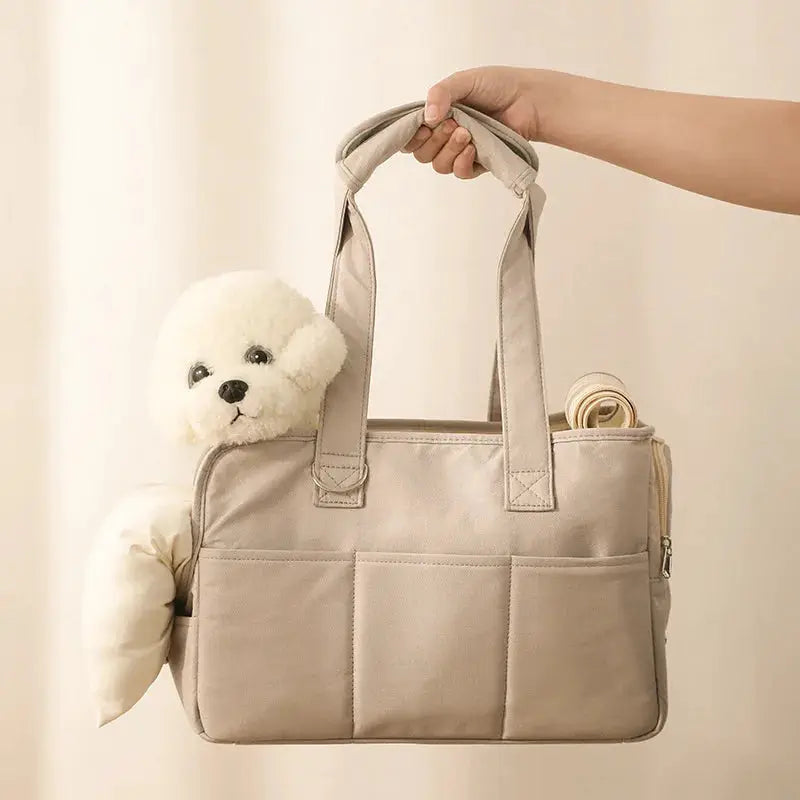
Cover the carrier during the drive and skip free-roaming in the car, which is a safety risk for cats and drivers alike.
Strollers and Mobility Gear for Pets Who Need a Slower Pace
Some anxious pets do better when they can see out and move at a walking pace. A stroller gives a nervous pet a protected vantage point instead of a carrier view.
The CHIHUAHUA pet stroller for small dogs and cats ($80.99) supports pets up to 39 lbs on a water-resistant 300D Oxford frame with dual leash clips and a full-view mesh seat. For larger or multiple pets, the Portable Dog Stroller 4 Wheels Foldable Travel Carrier ($215.99) accommodates a large dog or two small pets, with a 360° swivel front wheel and rear brakes.
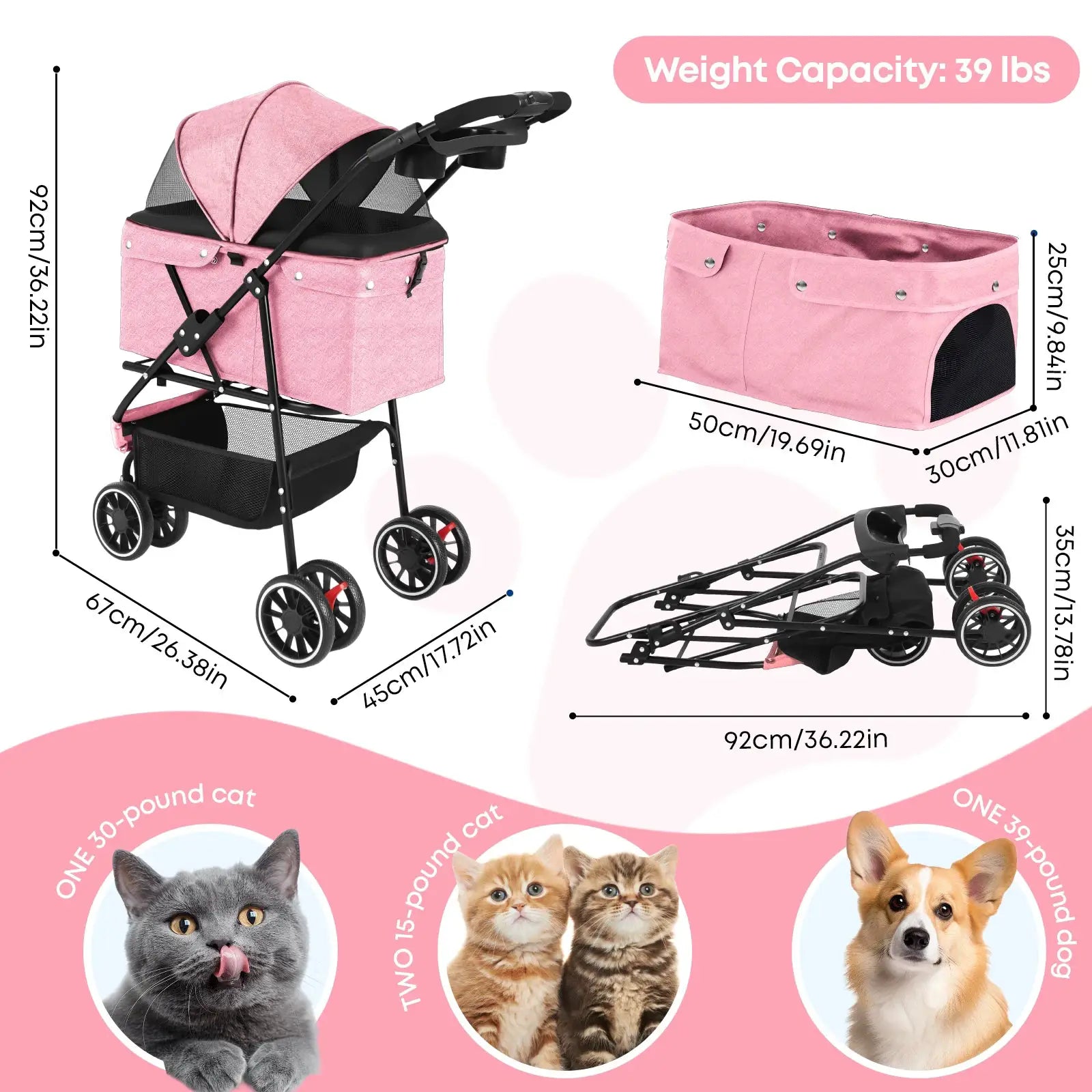
Best for: senior, injured, or easily spooked pets on errands. Skip if: your pet is comfortable walking and only needs a car solution.
Build Your Anxious Pet's Travel Kit at Furtastic
The right gear removes the variables that set a nervous pet off: sliding, overheating, escaping, and unfamiliar smells. Start with a carrier that fits properly, add a fixed car seat or hammock, and bring familiar bedding on every trip. Acclimation does the rest.
Furtastic Pet Essentials carries travel gear including carriers, boosters, and strollers. Our catalog covers durable travel gear and everyday essentials in one place, with customer service you can reach when you need help.
A nervous pet doesn't need more gear. It needs the right three or four pieces, chosen for its size, temperament, and the way it travels.
Frequently Asked Questions
What should I give an anxious dog when traveling?
Start with gear that reduces stress before reaching for supplements. A secure car seat or booster with a clip-on leash keeps a nervous dog from pacing, and a breathable carrier with a familiar blanket helps on longer trips. If you want to try calming products for dogs while traveling, talk to your vet first, especially about dosing and interactions with any medication your dog already takes. Test any chew, treat, or spray at home days before departure so you know how your dog reacts.
How do I choose a safe carrier for an anxious pet?
Match the carrier to your pet's weight and measure before buying. For small dogs up to 12 lb, a soft tote like the Winter Fleece Dog Carrier Tote Bag ($73.99) with metal anti-escape clips gives a nervous pet a snug, enclosed space. For air travel, look for airline-approved soft-side backpacks with mesh on multiple sides for airflow and a machine-washable pad. Check that zippers lock, seams are reinforced, and your pet can stand and turn inside.
Are calming beds or blankets useful for pets during travel?
Familiar bedding is one of the simplest ways to reduce travel stress. A blanket or pad that smells like home gives an anxious pet a consistent anchor inside a carrier or car seat. Choose machine-washable options, since travel can mean accidents or motion sickness. The removable fleece pad in the Soft Side Dog Carrier Backpack ($66.99) is machine-washable, which makes cleanup easier on long trips.
Should I try calming products before traveling with my pet?
Yes, test everything at home first. Give a calming treat, use a spray, or try a chew toy a few days before your trip so you can watch for drowsiness, stomach upset, or no effect at all. Never give a new supplement for the first time on travel day. For cats, a trial run in the carrier at home also shows whether your cat settles or panics, which tells you whether a stroller or a covered carrier is the better fit.
How can I help an anxious cat during a car ride?
Keep the carrier covered with a light blanket to reduce visual stimulation, secure it with a seat belt, and skip feeding for a couple of hours before the drive. A breathable side backpack like the Fluffybaby Cat Carrier ($72.99) works for short trips and vet visits, while a stroller helps at destinations where your cat needs to be out of the car. Play calm music, drive smoothly, and keep the first few trips short.
