

Cat Scratching Post That Looks Like a Tree: 2026 Guide
Table of Contents
- Why a Tree-Like Cat Scratching Post Beats a Plain Post
- Choosing the Right Height and Surface for Your Cat
- How to Train a Cat to Use a Scratching Post
- DIY Cat Scratching Post Tree Trunk: Sourcing and Prepping Wood
- Cat Tree Stability and Safety Standards to Check Before Buying
- Placement Tips: Where a Tree-Style Scratcher Works Best
- Stylish Tree Scratchers That Fit Your Home Decor
- Conclusion: Picking the Right Tree-Like Scratching Post
- Frequently Asked Questions
Last Updated: October 4, 2026
Why a Tree-Like Cat Scratching Post Beats a Plain Post
A cat scratching post that looks like a tree works better than a plain post because it matches what cats instinctively seek: vertical height, a rough natural surface, and a stable trunk they can grip and pull against.

The reason is simple. Scratching is a territorial marking behavior, not a hobby.
That difference matters more than most guides admit. Feline behavior specialists generally agree that cats prefer firm, rough surfaces over soft ones, which is why sisal rope and natural wood outperform plush carpet every time.
Below, we break down surface choices, sizing, training, DIY builds, and safety checks so you can pick the right tree-like scratcher the first time.
Choosing the Right Height and Surface for Your Cat
The right scratching surface for most cats is tightly wrapped sisal rope or debarked natural wood, and the right height is one where your cat can stretch fully upright without tipping the post. Get either wrong and the scratcher gets ignored.
Sisal Rope vs. Natural Bark: Which Surface Wins?
Sisal rope and natural bark both work, but they suit different cats. Sisal offers a consistent, replaceable texture that holds up to repeated scratching. Natural bark and raw wood appeal to cats who like a firmer, more irregular grip, and the wood grain adds textural variety that keeps some cats interested longer.
A practical compromise: choose a post with a sisal-wrapped trunk and a wood or plywood base. You get the durability of sisal with the natural look of wood.
Matching Post Height to Your Cat's Stretch
Measure your cat from nose to the base of the tail while standing, then add roughly half that length again. That total is the minimum height for full-stretch scratching.
- Kittens and small cats: posts around 18-24 inches work well
- Average adult cats: aim for 28-33 inches
- Large breeds and tall cats: 36 inches or more
A post that's too short forces your cat to scratch in a crouch, which many cats simply won't do. The PAWZ Road Cactus Cat Scratcher Post, for example, uses three poles ranging from 7.5 to 20.9 inches, giving cats of different ages a choice of scratching heights on one base.

How to Train a Cat to Use a Scratching Post
Training a cat to use a scratching post takes days, not weeks, if you place the post correctly and reward the behavior the moment it happens.
- Place the post next to whatever your cat already scratches
- Play with a wand toy so your cat stretches against the post naturally
- Reward any contact with a treat or praise immediately
- Scratch the post lightly yourself to demonstrate
- Move the post a few inches toward its permanent spot each week
- Never punish scratching on furniture; redirect instead
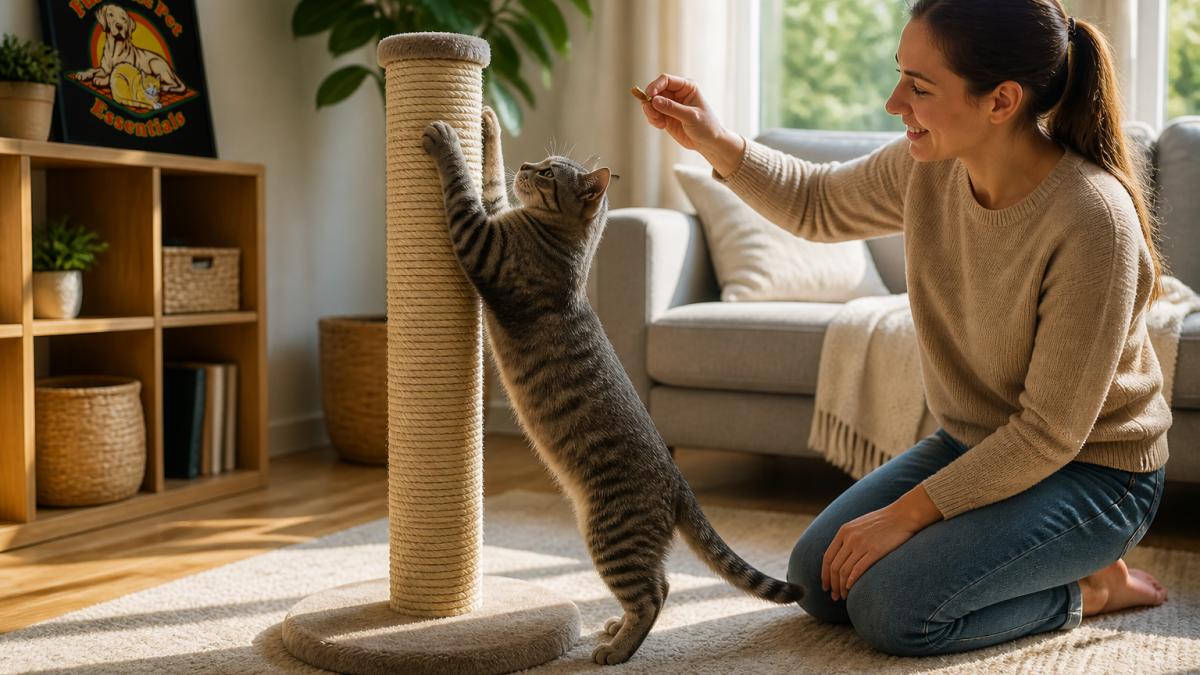
Expect some cats to test the post with a single paw before committing. That's normal. Give it a week before deciding a scratcher has failed.
DIY Cat Scratching Post Tree Trunk: Sourcing and Prepping Wood
A DIY cat scratching post tree trunk starts with one safe branch, thorough drying, and a base heavy enough to survive a full-stretch scratch. Skip any of those three and the build either cracks, molds, or tips over. This section goes beyond the usual "find a branch and bolt it on" advice to cover the structural engineering that most DIY guides ignore.
Debarking, Drying, and Treating Branches Safely
Sourcing safe wood means avoiding any branch that could carry pesticides or sap. Good candidates include maple, oak, birch, and apple wood. Avoid cherry, which can be toxic to cats, along with any branch from a tree you can't identify. If you're unsure, the ASPCA's toxic and non-toxic plant database is a reliable reference for confirming a wood species is safe around cats.
Once you've chosen a branch:
- Remove loose bark with a drawknife or stiff brush, leaving some texture
- Sand rough edges and any sharp stubs
- Let the wood air-dry in a dry, ventilated space for several weeks
Building a Stable Base and Mounting the Trunk
Stability comes from base weight, not from how tightly you bolt the trunk.
Here's a step-by-step approach to mounting the trunk:
- Choose a base material: 3/4-inch plywood or solid wood works well. Avoid particle board, which crumbles under stress.
- Cut the base to size: at least as wide as half the post height, ideally wider for tall posts.
- Attach a metal flange to the bottom of the trunk using lag bolts, not screws alone. Lag bolts resist the lateral force of scratching better than screws.
- Secure the flange to the base with bolts that go through the base, using washers and lock nuts to prevent loosening.
- Add rubber feet or felt pads to stop sliding on hard floors.
- Check the bolts monthly; they loosen with heavy use.
A common pattern is to add a second, smaller base plate on top of the main base for extra rigidity.
Our PEQULTICN Cactus Cat Tree uses a thick plywood base with a textured finish, which is the same principle: wide footprint, low center of gravity, no wobble.
Cat Tree Stability and Safety Standards to Check Before Buying
Cat tree stability and safety standards come down to three checks: base weight and width, hardware quality, and material safety. A tall post with a narrow base is a hazard, not a scratcher. But most guides stop there. The bigger gap is toxicity: many cat owners don't realize that certain woods and finishes can be harmful if chewed or scratched.
PEQULTICN Cactus Cat Tree With Condo Hammock And Toys →

Before you buy, verify:
- The base is wider than the tallest point is high
- The post uses sisal or natural wood, not glued-on carpet scraps
- All hardware is metal, with no exposed staples or sharp edges
Wood Species and Toxicity: What Most Guides Miss
Not all natural wood is safe for cats. Some species contain compounds that can cause gastrointestinal upset or worse if ingested. The ASPCA maintains a searchable database of toxic and non-toxic plants, and while it focuses on plants, the same principles apply to wood. Here are common woods used in cat furniture and their safety status:
- Safe: Maple, oak, birch, apple, ash, and pine (untreated). These are generally considered non-toxic.
- Avoid: Cherry, which contains cyanogenic compounds that can be toxic. Also avoid black walnut, which contains juglone, and any wood treated with pesticides, stains, or sealants.
- Treated wood: Pressure-treated lumber (often labeled "ACQ" or "CCA") contains chemicals that can be harmful. Never use it for cat furniture.
If you're buying a manufactured cat tree, look for products that explicitly state the wood species and that they are free of added dyes and finishes. Vague claims like "eco-friendly" or "natural" are not enough. A reputable manufacturer will list materials.
Stability: The Physics Behind a Safe Post
Stability isn't just about a wide base; it's about the ratio of base weight to post weight and the height of the center of gravity. A post with a heavy base but a light trunk can still tip if the base is too narrow.
Also check the hardware: metal flanges and lag bolts are better than screws. If the post uses a single central bolt, it may wobble over time. Look for posts with multiple attachment points.
For manufactured furniture, look for products that clearly state their materials rather than vague "eco-friendly" claims. The ASPCA's toxic and non-toxic plant database is a useful reference if you're building with natural branches and want to confirm a wood species is safe around cats.
Placement Tips: Where a Tree-Style Scratcher Works Best
Place a tree-style scratcher where your cat already spends time and already scratches, not in a quiet corner. Cats scratch near their resting and social areas, so a post beside the sofa beats one hidden in a spare room.
Good spots include:
- Next to the piece of furniture your cat currently targets
- Near a window where your cat watches birds
- Beside their favorite sleeping spot
If you have multiple cats, place one scratcher per cat plus one extra. Territorial marking is a big part of why cats scratch, so sharing a single post often leads to conflict.
Stylish Tree Scratchers That Fit Your Home Decor
Tree-style scratchers can look like furniture instead of pet gear, which matters if your cat's setup lives in your living room. Nature-inspired designs with wood tones and green accents blend into modern interiors far better than beige carpet towers.
A few options from our catalog that fit that brief:
| Product | Price | Surface | Best For |
|---|---|---|---|
| PEQULTICN Cactus Cat Tree With Condo Hammock And Toys | $50.99 | Sisal-wrapped post | Cats who want scratching plus a nap spot |
| PEQULTICN Cactus Cat Tree With Dangling Ball | $50.99 | Sisal-wrapped post | Small spaces needing vertical activity |
| JHK Palm Tree Cat Scratching Post With Dangling Ball | $40.99 | Hemp post | Cats who like a swinging toy |
| PAWZ Road Cactus Cat Scratcher Post With Three Scratching Poles | $47.99 | Green natural sisal and carpet | Multi-cat homes needing varied heights |
The JHK Palm Tree Cat Scratching Post uses a hemp post with reinforced construction built to resist wobble and peeling, plus 3D palm leaves that read as decor rather than pet equipment.
Conclusion: Picking the Right Tree-Like Scratching Post
The hardest part of choosing a tree-like scratcher isn't finding one.
Get the surface and height right, train with patience, and check stability before you buy or build. That's the whole formula.
At Furtastic Pet Essentials, we stock cat trees and scratchers built around those exact priorities: durable sisal and natural materials, stable plywood bases, and designs that fit a modern home.
Frequently Asked Questions
Should I get a cat tree or a scratching post?
It depends on your cat's habits and your space. A scratching post handles one job: giving your cat a dedicated place to scratch and stretch. A cat tree adds perches, condos, and climbing. If your cat already scratches furniture and needs redirection, a tree-style scratching post like the JHK Palm Tree Cat Scratching Post ($40.99) covers the basics. If your cat likes to climb and lounge up high, a full cat tree such as the PEQULTICN Cactus Cat Tree ($50.99) gives both scratching and vertical territory in one piece.
Are real wood cat scratching posts safe for indoor cats?
Yes, when the wood is properly prepared. Kiln-dried hardwood branches free of pesticides, mold, and insect infestations are safe. Avoid pressure-treated lumber and any wood that has been stained, painted, or sealed with products not labeled pet-safe. Debark the branch or leave thin, tightly attached bark that does not flake. Sand rough edges and check for splinters. Cedar and pine shavings are not the same as a solid trunk, so a clean, dry hardwood trunk is the safer choice for a DIY cat scratching post tree trunk.
What type of scratching post do cats like best?
Most cats prefer a vertical post tall enough to stretch fully, usually at least 30 inches, with a rough, resistant surface. Sisal rope is the most popular because it shreds without splintering. Natural bark offers textural variety that some cats find more satisfying. Stability matters as much as surface: a post that wobbles will get ignored. The PAWZ Road Cactus Cat Scratcher ($47.99) uses three sisal-wrapped poles at different heights, which suits cats that scratch at different angles.
How do I train my cat to use a new scratching post?
Place the post near where your cat already scratches, not in a hidden corner. Rub the surface with a little catnip or silvervine, then reward your cat with a treat and praise the moment its claws touch the post. Redirect scratching from furniture by picking your cat up gently and placing its paws on the post. Trim nail tips every 10 to 14 days so scratching is less destructive during the transition. Most cats accept a new post within one to three weeks of consistent redirection.