

How to Choose Safe Non-Toxic Pet Bedding
Table of Contents
- Why Safe Non-Toxic Pet Bedding Matters
- Potentially Harmful Chemicals and Materials to Avoid
- Safe Pet Bed Materials Worth Considering
- Pet Bed Certifications and How to Verify Claims
- How to Clean Pet Bedding Safely
- Species-Specific Bedding Guidance and Evaluation Checklist
- Frequently Asked Questions
Last Updated: October 11, 2026
Why Safe Non-Toxic Pet Bedding Matters
Your pet spends a third of their life sleeping on bedding. When you choose safe non-toxic pet bedding, you protect them from chemicals that trigger allergies, skin irritation, and long-term health issues.

Many pets develop sensitivities to synthetic materials, flame retardants, and chemical dyes found in low-quality bedding. These substances can off-gas over time, especially in warm environments like sunny bedrooms or near heating vents.
Potentially Harmful Chemicals and Materials to Avoid
Not all pet bedding is created equal. Understanding which risks are evidence-based and which are marketing claims is essential to making an informed choice.

Synthetic Foam and Off-Gassing Concerns
Many budget pet beds use polyurethane foam, which releases volatile organic compounds (VOCs) into the air, a process called off-gassing. Your pet breathes these fumes while sleeping, especially when bedding is new.
What the evidence shows: Off-gassing is strongest in the first few days to weeks after manufacture. Health risk depends on VOC type and concentration, sleeping space size, and pet sensitivity.
What is less clear: Long-term health effects of low-level VOC exposure from pet bedding are not well-documented in veterinary literature. Marketing claims of "toxicity" or "chemical poisoning" lack evidence.
Practical concern: Polyurethane foam breaks down faster than natural alternatives, compressing within months to a year and losing supportive structure, a durability and comfort issue rather than a toxicity issue.
Better alternatives: Natural latex, memory foam certified for low-VOC emissions (CertiPUR-US), or plant-based foam alternatives minimize off-gassing while maintaining support.
Fire Retardants and Chemical Treatments
Federal regulations require many pet bed covers to meet flammability standards. Manufacturers often achieve this by treating fabrics with chemical flame retardants, which can persist on the fabric surface and transfer to your pet's skin over time.
Common flame retardants include:
- Brominated compounds (historically used, now less common due to health concerns)
- Chlorinated phosphates
- Antimony trioxide (often used with other retardants)
- Halogenated organic compounds
What research suggests: Some flame retardants accumulate in body tissues and may interfere with hormone regulation and immune function (pubmed.ncbi.nlm.nih.gov). However, most research focuses on occupational or high-dose exposure, not low-level contact from sleeping on treated bedding. The actual risk to your pet is not quantified in veterinary studies.
What you should know: Newer, non-halogenated retardants are safer than older brominated compounds. Many manufacturers now use physical barriers or inherently flame-resistant fibers instead of chemical treatments.
Natural alternatives: Organic cotton, wool, and linen are naturally flame-resistant due to their fiber structure and moisture content. They meet federal flammability standards without chemical treatment.
Other Materials to Evaluate
Synthetic dyes and finishes: Conventional synthetic dyes can contain heavy metals and azo compounds linked to allergic reactions. Low-impact and natural dyes pose lower risk. Reputable manufacturers disclose dye type.
Adhesives and glues: Bedding layers bonded with polyurethane or rubber-based adhesives can off-gas. Mechanically stitched or naturally bonded layers are safer.
Waterproof liners: Polyurethane or PVC-based liners can off-gas and reduce breathability. Choose products with natural rubber or polyester-based waterproofing, or skip the liner if your pet is housetrained.
Safe Pet Bed Materials Worth Considering
The best safe non-toxic pet bedding uses natural, breathable materials that support comfort without chemical exposure.

Natural and Organic Bedding Materials
Organic cotton is grown without synthetic pesticides or fertilizers. It's soft, breathable, naturally hypoallergenic, and won't irritate sensitive skin.
Merino wool regulates temperature naturally, wicks moisture, and is naturally antimicrobial, resisting odors without chemical treatments.
Hemp fabric is durable, naturally resistant to mold and mildew, and becomes softer with washing. It's also sustainable and biodegradable.
Linen is lightweight and breathable, ideal for pets that overheat easily. It becomes softer with each wash.
Jute is a sturdy, eco-friendly plant fiber often used in the base layer of safe non-toxic pet bedding for structure and support.
For filling materials, look for:
- Recycled polyester (if labeled low-VOC)
- Natural latex
- Buckwheat hulls
- Kapok (silky plant fiber)
Natural Latex and Alternative Filling Materials
Natural latex comes from rubber trees. It's hypoallergenic, naturally antimicrobial, resists dust mites, and doesn't off-gas harmful chemicals. It maintains shape and support longer than polyurethane foam, offering better long-term value.
Important note: Some pets have latex allergies. Avoid latex bedding if your pet shows excessive scratching, rashes, or swelling.
Memory foam certified for low-VOC emissions can be safe if it meets strict standards. Look for foam certified by CertiPUR-US, which limits harmful chemicals and off-gassing.
Organic Cotton and Other Natural-Fiber Covers
Covers matter as much as filling since your pet's skin contacts them directly. Organic cotton covers eliminate pesticide residue and synthetic dyes that trigger reactions. Natural or low-impact dyes are safer than conventional synthetic dyes, which contain heavy metals and azo compounds.
Removable, washable covers are essential, they allow regular cleaning without replacing the entire product, extending bedding life and keeping it fresh.
Pet Bed Certifications and How to Verify Claims
"Natural" and "eco-friendly" labels are unregulated. Certifications provide third-party verification that a product meets safety standards.
OEKO-TEX Standard 100 certifies that textiles have been tested for harmful substances. This certification covers dyes, finishes, and chemical residues. It's one of the most reliable marks for safe pet bedding.
CertiPUR-US certifies foam for low emissions, durability, and safety. Foam with this label has been independently tested and meets strict standards for VOC emissions.
GOTS (Global Organic Textile Standard) verifies that cotton is grown organically and processed without toxic chemicals. It's the gold standard for organic cotton products.
BINGOPAWCN Anti Allergy Dog Bed With Removable Washable Cover Waterproof →
Cradle to Cradle certification assesses the entire product lifecycle. It covers material sourcing, manufacturing, and end-of-life disposal.
Check product descriptions for certifications, reputable brands display them prominently. If absent, ask the seller for documentation. Only certifications from independent third parties carry real weight.
| Certification | What It Verifies | Best For |
|---|---|---|
| OEKO-TEX Standard 100 | Harmful substances in textiles | Pet bed covers and fabrics |
| CertiPUR-US | Foam emissions and safety | Memory foam and cushioning |
| GOTS | Organic cotton production | Cotton covers and liners |
| Cradle to Cradle | Full product lifecycle | Overall sustainability |
How to Clean Pet Bedding Safely
Proper cleaning keeps safe non-toxic pet bedding fresh and extends its lifespan. The wrong cleaning method can damage materials or reintroduce chemicals.
Machine wash in cold or warm water with gentle, pet-safe detergent. Avoid fabric softeners and bleach, which leave chemical residues. Air dry whenever possible; heat damages natural fibers. If using a dryer, choose low heat to prevent fiber breakdown and foam warping.
Wash covers every 1-2 weeks for allergic or sensitive pets; monthly for healthy pets. For removable covers, wash covers weekly and the insert monthly.
Species-Specific Bedding Guidance and Evaluation Checklist
The right safe non-toxic pet bedding depends on your pet's age, size, health, sleeping style, and species-specific behaviors.
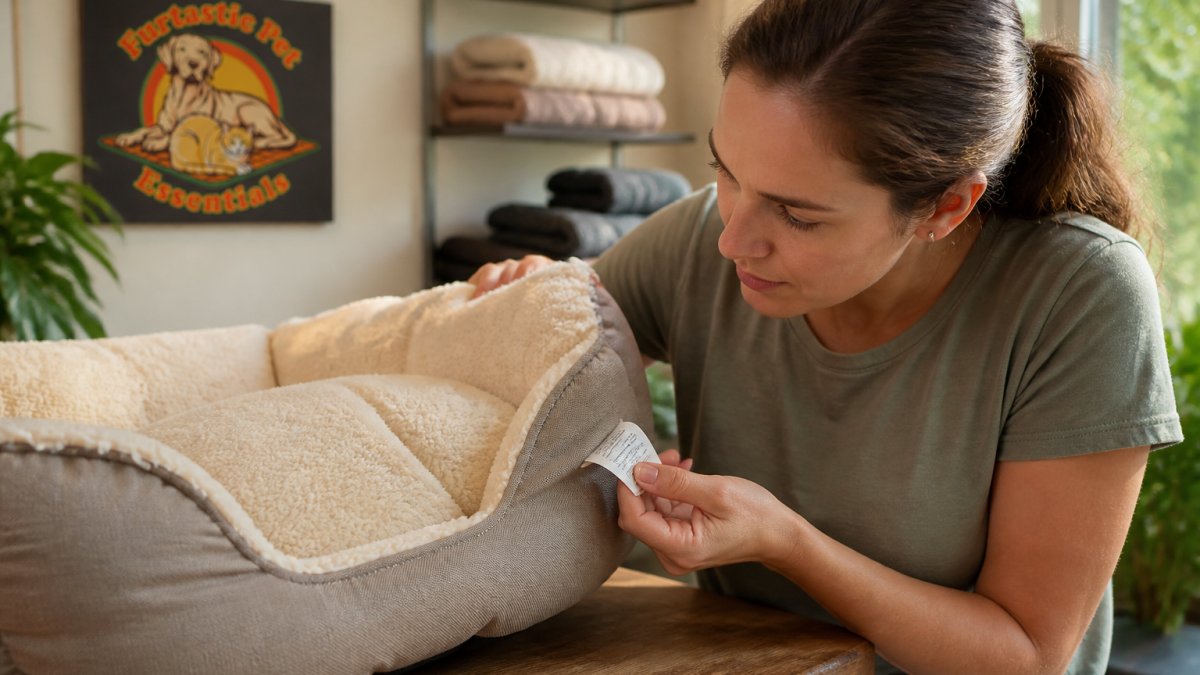
Bedding for Dogs with Allergies and Sensitive Skin
Dogs with allergies need bedding that minimizes irritants at every layer. Prioritize organic cotton or natural fibers without synthetic dyes for the cover.
What to look for:
- Organic cotton covers (GOTS-certified if possible) to eliminate pesticide residue
- Low-impact or natural dyes instead of synthetic dyes
- Filling that is natural latex, buckwheat hulls, or CertiPUR-US certified foam
- Removable, machine-washable covers so you can wash weekly to remove allergens
- No synthetic foam or polyurethane, which off-gas compounds that trigger respiratory and skin reactions
Washing protocol for allergic dogs: Wash covers weekly in unscented, hypoallergenic detergent. Avoid fabric softeners. Air dry to prevent heat damage.
Avoid: Cedar and pine shavings (if used as filling), synthetic flame retardants, and heavily dyed covers.
Choosing Bedding for Cats
Cats prefer enclosed or cozy spaces and are sensitive to strong chemical odors, which cause stress and behavioral changes.
What to look for:
- Natural cotton and wool for warmth without overheating
- Organic or low-impact dyed covers to reduce chemical odors
- Cave-like or raised-edge designs for security
- Removable covers for regular washing
Avoid: Cedar and pine shavings (toxic to cats' respiratory systems), synthetic foam with strong chemical odors, and heavily treated or dyed fabrics.
Bedding for Small Pets (Rabbits, Guinea Pigs, Hamsters)
Small pets spend extended time burrowing in bedding and are sensitive to dust, ammonia, and respiratory irritants.
What to look for:
- Soft, natural materials like organic cotton, hemp, or aspen shavings (not cedar or pine)
- High absorbency to manage urine moisture
- Dust-free materials
- Frequent replacement (2-3 times per week)
Avoid: Cedar and pine (highly toxic to small mammals), synthetic foam, heavily dyed materials, and bedding treated with chemical odor control.
Bedding for Birds
Birds have sensitive respiratory systems and are vulnerable to off-gassing and dust.
What to look for:
- Paper-based or aspen shaving bedding
- Organic cotton or untreated natural fiber perches
- Bedding free of dyes, perfumes, and chemical treatments
Avoid: Synthetic foam, cedar and pine, heavily dyed materials, and anything with chemical odor control or flame retardants.
A Practical Product-Evaluation Checklist
Use this step-by-step method when comparing safe non-toxic pet bedding options before you buy:
Step 1: Check the Label and Certifications
- Product label lists specific materials (cover, filling, adhesive, waterproof layer)
- At least one third-party certification is visible (OEKO-TEX, CertiPUR-US, GOTS, or Cradle to Cradle)
- Manufacturer discloses flame retardant type or states "no chemical flame retardant"
- Dye type is listed
Step 2: Evaluate the Cover
- Cover is 100% organic cotton, wool, linen, or natural fiber
- No synthetic dyes or chemical finishes listed
- Cover is removable and machine washable
- Zipper is hidden or absent
Step 3: Assess the Filling
- Filling is natural latex, natural fiber (buckwheat, kapok), or low-VOC certified foam
- If foam is used, it carries CertiPUR-US certification
- No polyurethane foam or low-density synthetic materials
- Filling is bonded mechanically (stitched) or with natural adhesive, not chemical glue
Step 4: Check for Hidden Treatments
- No chemical flame retardants (or specific type disclosed)
- No antimicrobial chemical treatments (unless naturally antimicrobial, like wool or latex)
- No waterproof backing, or backing is natural rubber or polyester-based (not PVC)
- No synthetic odor-control treatments
Step 5: Verify Manufacturer Transparency
- Manufacturer provides material sourcing information
- Manufacturer offers a return or trial period (at least 30 days)
- Manufacturer provides a care and washing guide
- Contact information is available
Step 6: Match to Your Pet's Needs
- Bedding size is appropriate for your pet's body length
- Material choice matches your pet's species and sensitivities
- Design suits your pet's preference
- Washability matches your pet's needs
Step 7: Consider Long-Term Value
- Covers are replaceable or product lasts 2+ years with proper care
- Washing instructions are realistic for your routine
- Repair options are available if seams or zippers fail
- Material is recyclable or compostable
Red flags to avoid:
- Vague terms without certifications
- No material disclosures or manufacturer contact
- Foam with no VOC certification
- Waterproof liners without material specification
- No removable cover or dry-clean-only covers
- Human bedding marketed to pets
Frequently Asked Questions
What materials are safest for pet bedding?
The safest materials include organic cotton, natural latex, hemp, merino wool, and linen. These materials are breathable, hypoallergenic, and free from synthetic chemicals and off-gassing concerns. Avoid polyurethane foam and synthetic bedding treated with fire retardants or chemical dyes. Look for beds with removable, washable covers and transparent labeling about fill materials and adhesives used.
How can I tell whether a pet bed is genuinely non-toxic?
Check for third-party certifications like OEKO-TEX, GOTS, or CertiPUR-US, which verify low-VOC content and chemical safety. Review the product label for specific materials and adhesives used. Ask manufacturers directly about off-gassing testing and chemical treatments. Avoid vague terms like 'eco-friendly' or 'natural' without supporting certifications. Reputable brands disclose material composition and sourcing transparently.
How often should I wash or replace my pet's bedding?
Wash removable covers every 1-2 weeks, or more frequently if your pet has allergies or accidents. Machine-washable beds should be laundered according to care instructions to prevent fabric degradation. Replace bedding entirely every 12-18 months, or sooner if foam becomes compressed, covers show wear, or odor persists after washing. Pets with allergies or sensitive skin may benefit from more frequent washing to reduce allergen buildup.
What should I look for in a non-toxic pet bed for a dog with allergies?
Choose beds with hypoallergenic fill materials like memory foam or natural latex, paired with organic cotton or natural-fiber covers. Ensure the bed has a removable, machine-washable cover for frequent cleaning to reduce allergen accumulation. Avoid synthetic foam and bedding treated with dyes, adhesives, or chemical flame retardants. The BINGOPAWCN Anti Allergy Dog Bed with removable washable cover features puppy-safe, eco-friendly materials and a waterproof liner.