

Non-Toxic Cat Litter Alternatives: 8 Safe Options
Table of Contents
- Why Cat Owners Are Switching From Clay Litter
- What Makes Cat Litter Non-Toxic?
- Biodegradable Cat Litter Options That Actually Work
- Is Silica Gel Litter Safe for Cats?
- How to Transition Cat to New Litter Without Stress
- Disposal, Plumbing, and Multi-Cat Logistics
- Matching Your Litter Box to Your Litter Choice
- Frequently Asked Questions
Last Updated: October 2, 2026
Why Cat Owners Are Switching From Clay Litter
A growing number of cat owners are rethinking the bag of clay litter under their sink. Traditional clay litter comes with real trade-offs, and the alternatives have gotten good enough that there's little reason to tolerate them.
Dust, Silica, and Synthetic Fragrance Concerns
Clay litter is strip-mined, which makes it a non-renewable resource, and the fine dust it kicks up settles on floors, furniture, and cat fur. The ASPCA's cat litter guidance notes that dusty litters can aggravate respiratory issues in sensitive cats. Synthetic fragrances and silica gel beads are the other common complaint: both can irritate a cat's nose and paws, and cats have a far lower tolerance for scent than humans do.
What Makes Cat Litter Non-Toxic?
Non-toxic cat litter is made from plant-based or paper materials with no synthetic fragrance, no silica dust, and no harsh chemical additives. It should be biodegradable or compostable, low in dust, and safe if a cat ingests a small amount while grooming.
- Material: wood, wheat, corn, paper, coconut coir, or tofu, not clay or silica
- Additives: no synthetic fragrance, no dyes, no chemical clumping agents
- Disposal: compostable or septic-safe where the packaging says so
Biodegradable Cat Litter Options That Actually Work
Biodegradable cat litter breaks down naturally after use, so it can be composted instead of sitting in a landfill for decades. The best options come from five material families, each broken out below by clumping mechanism, dust profile, odor control, and which cats do best on it.
Wood, Wheat, Corn, Paper, and Coconut Coir Compared
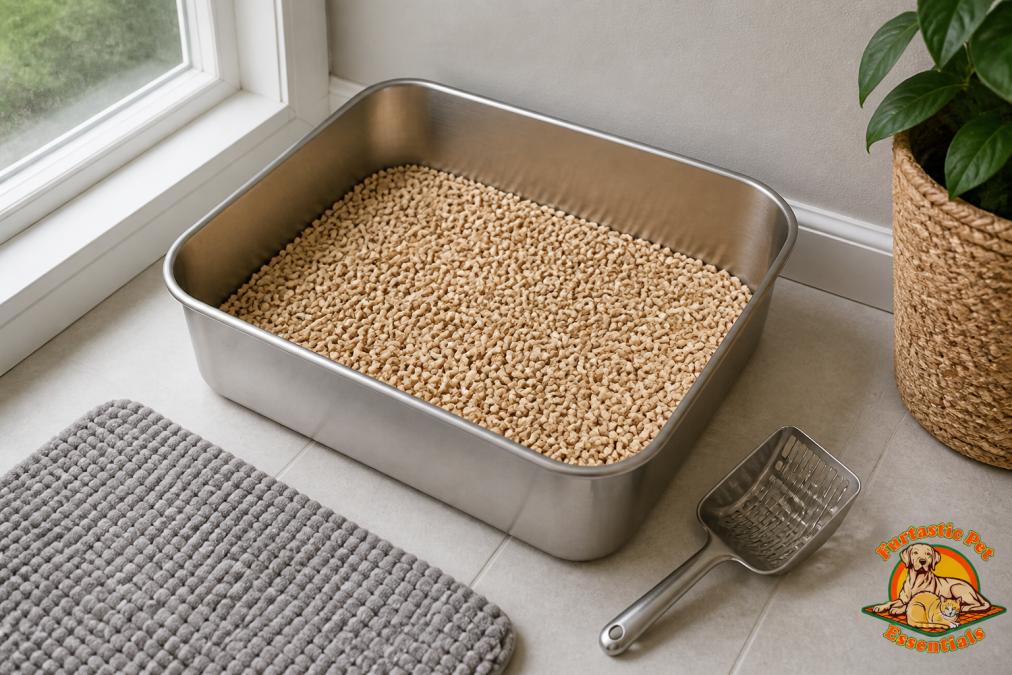
Wood-based litter is kiln-dried and pelletized, giving it strong absorbency and a natural pine or cedar scent. Pellets break down into sawdust when wet, so you scoop solids and stir the rest, and the wood fibers bind ammonia for among the best odor control of any plant-based option. The trade-off is texture: many cats need a gradual introduction, and pellets scatter more than fine-grain litters, so a deep box with high walls helps.
| Material | Clumping | Dust Level | Odor Control | Best For | Watch Out For |
|---|---|---|---|---|---|
| Wood pellets | No (breaks down) | Very low | Strong (binds ammonia) | Odor control, large boxes | Texture adjustment period |
| Wheat | Yes (starch) | Low | Good | Firm clumps, low tracking | Storage pests; grain-sensitive cats |
| Corn | Yes (starch) | Low | Strong | High absorbency | Grain-sensitive cats; heavier bags |
| Paper | No | Minimal | Moderate | Kittens, allergies, senior cats | Frequent full changes |
| Coconut coir | Varies | Low | Moderate | Lightweight handling | Inconsistent quality across brands |
Matching the Material to the Cat, Not the Marketing
Owners who switch successfully pick the material based on the cat's health history first and convenience second. Cats with asthma or chronic sneezing do best on wood pellets or paper, both very low in airborne dust. Grain-sensitive cats do best on paper or coir. Multi-cat homes battling odor do best on wood or corn, which bind ammonia most aggressively. Kittens and post-surgery cats do best on paper, which is soft, non-clumping, and unlikely to irritate incision sites.
Is Silica Gel Litter Safe for Cats?
Silica gel litter is generally considered safe for healthy adult cats, but it's not right for every household. The beads are a synthetic desiccant, and while non-toxic if swallowed in small amounts, the dust and texture raise flags for some owners.
Where silica falls short:
- It's not biodegradable, so it works against the sustainability goal
- The beads are hard underfoot, which some cats refuse
- Dust can irritate sensitive respiratory systems
- It's typically the most expensive per pound
How to Transition Cat to New Litter Without Stress
The two-week method works for most cats:
- Days 1-3: Mix 25% new litter with 75% old litter
- Days 4-7: Move to a 50/50 blend
- Days 8-11: Increase to 75% new litter
- Days 12-14: Switch fully once your cat is using the box normally
- Keep the box in the same spot and scoop daily throughout
If your cat refuses at any stage, hold at the current ratio for a few extra days. Patience beats pressure every time.
Disposal, Plumbing, and Multi-Cat Logistics
Most guides stop at "compost it or toss it." That advice breaks down the moment you're standing over a toilet with a bag of "flushable" litter, or staring at four litter boxes and a monthly budget. Here's what actually happens when litter meets your plumbing, and how the math changes in a multi-cat home.
Bingopaw Stainless Steel Cat Litter Box →
Disposal Rules by Material
Disposal rules vary by material, and the differences matter more than the packaging suggests:
- Wood, wheat, corn, paper, and coconut coir can all go in the trash. Most are compostable in a home compost bin, but keep cat waste out of compost that will touch food crops, cat feces can carry Toxoplasma and other pathogens that a backyard compost pile doesn't reliably kill.
- Never flush cat waste or litter into a septic system. Even litters marketed as septic-safe add solids that a septic tank is not sized to handle, and the added volume can accelerate the need for pumping.
- Municipal wastewater systems are designed for human waste and toilet paper, not litter solids. Litter that doesn't break down quickly can settle in low-flow sections of pipe and contribute to clogs over time.
The "Flushable" Claim, Examined
"Flushable" on a litter bag is a marketing claim, not a plumbing guarantee. Whether a litter is actually safe to flush depends on how fast it disintegrates and how much you send down at once. A single scoop in a modern, well-sloped drain line is very different from a full box change in an older home with cast-iron or narrow-diameter pipes.
- Older plumbing, homes built before the 1980s often have pipe diameters and slopes not designed for the volume of solids a litter flush introduces.
- Septic systems, sized for a specific daily flow of human waste, they're thrown off by litter solids that don't break down at the same rate, shortening the interval between pump-outs.
- Municipal systems, even where flushing is technically allowed, litter solids can contribute to the fatberg-style blockages utilities spend millions clearing each year.
Multi-Cat Household Logistics
The general rule is one box per cat, plus one, three cats need four boxes, each scooped daily. The volume math is where plant-based litters differ from clay:
- Cost per pound, plant-based litters often cost more per pound than basic clay, but they typically weigh less per cubic foot, so a bag goes further in terms of box volume. The right comparison is cost per box change, not cost per bag.
- Bulk buying, most plant litters are sold in 10-, 20-, and 40-pound bags. For a multi-cat home, the 40-pound bag is usually the best cost-per-pound option, but only if you have dry storage. Wheat and corn attract pests when stored loosely, so decant into an airtight bin.
- Scooping frequency, because plant litters tend to clump less aggressively than clay, multi-cat homes often need to scoop twice daily rather than once. Budget the time, not just the money.
- Box material, stainless steel resists odor absorption far better than plastic, which matters more with every additional cat. Plastic boxes develop micro-scratches that harbor bacteria and hold onto ammonia smell even after washing.
Matching Your Litter Box to Your Litter Choice
The right box makes any non-toxic cat litter work better. Litter texture, box depth, and entry style all affect how much litter ends up on your floor, so pair them deliberately.

A few pairings that hold up in practice:
- Pelletized wood litter works best in a deep box with high walls, since pellets scatter when cats dig
- Paper and coir litter suit open-top boxes that are easy to fully empty and wipe down
- Clumping wheat or corn performs well in an enclosed box with a filter to contain odor
- Multi-cat setups benefit from stainless steel, which resists odor absorption better than plastic
Frequently Asked Questions
What is the safest non-toxic cat litter?
There is no single safest option, but litters made from natural fibers like wood, wheat, corn, paper, and coconut coir avoid the silica dust and synthetic fragrances found in some clay products. Look for biodegradable, plant-based formulas with no added perfumes. Cats with respiratory sensitivities often do better with dust-free, pelletized, or granulated litters. If your cat has allergies or asthma, ask your veterinarian before switching.

Are clay litters toxic to cats?
Most clay litters are not toxic if ingested in small amounts, but they can cause digestive upset. The bigger concern is the dust: sodium bentonite clay produces fine silica particles that can irritate feline respiratory health over time. Clumping clay can also harden inside the digestive tract if a cat swallows a significant amount. Non-toxic cat litter alternatives made from plant fibers avoid both issues.
How do I transition my cat to a new litter type?
Mix the new litter with the old one, starting at roughly 25% new to 75% old. Increase the ratio every two to three days over one to two weeks. Keep the litter box in the same spot, scoop daily, and never switch boxes and litter at the same time. If your cat avoids the box, back up to the previous ratio and slow down. Some cats adapt in days; others need a full month.
Is biodegradable cat litter flushable?
Not always. Even biodegradable litters can clog pipes because they absorb water and expand. Septic-safe formulas exist, but most municipal waste systems recommend bagging and disposing of cat waste in the trash. Cat feces can carry Toxoplasma, which water treatment plants may not fully remove. Check your local guidelines before flushing any litter.
What is a natural alternative to cat litter?
Natural alternatives include wood pellets, wheat, corn, paper pellets, coconut coir, and tofu-based litters. These use renewable resources and break down more readily than clay. Some owners also use sand or sawdust, though these track heavily and offer weaker odor control. For the best balance of absorbency, odor neutralization, and low tracking, pelletized wood and wheat litters tend to perform well.
Switching to a non-toxic cat litter is one of the simplest upgrades you can make for your cat's health and your home's air quality. The hard part isn't choosing a material, it's finding a box that keeps up with it. Furtastic Pet Essentials offers a full range of stainless steel litter boxes with dual-entry designs, odor-resistant interiors, and included scoops, all built to make daily cleanup faster. Browse the collection and find the setup that fits your cat, your space, and your routine.