

Hemp vs Nylon Dog Collars for Everyday Walks
Last Updated: November 14, 2026
Quick Summary
Hemp dog collars suit everyday wear, sensitive skin and owners who want a natural, biodegradable material, while nylon suits swimmers, mud lovers and budget-conscious buyers who want easy cleaning and a wide color range. Hemp resists odor and softens with age, but nylon repels water, dries fast and is machine washable.
- Hemp is naturally hypoallergenic and breathes, so it does not trap heat against the neck.
- Nylon webbing repels water and dries quickly, which keeps it mildew-resistant in humid conditions.
- Hand wash hemp in lukewarm water with mild soap, then dry it flat in open air.
- Deep clean either collar every two to four weeks, more often for dogs that swim or roll in dirt.
- A hemp martingale collar tightens gently when a dog pulls, keeping it from slipping over the head.
Table of Contents
- Hemp vs Nylon Dog Collars: A Side-by-Side Comparison
- Durability, Strength, and Expected Lifespan
- The Benefits of Hemp Dog Collars for Comfort and Sensitive Skin
- Breathability, Moisture, Odor, and Mildew Resistance
- How to Clean Hemp Dog Collars vs Nylon Collars
- Fit, Sizing, Hardware, and the Hemp Martingale Dog Collar Option
- Environmental Trade-Offs Across the Product Lifecycle
- Choosing the Right Collar for Your Dog's Lifestyle
- Frequently Asked Questions
Hemp vs Nylon Dog Collars: A Side-by-Side Comparison
Hemp dog collars and nylon collars split most buyers into two camps, and the choice comes down to how your dog lives. Hemp and nylon each have clear strengths, and the choice comes down to how your dog lives: hemp is often favored for comfort and odor control, while nylon is often favored for price, color range, and easy cleaning. Below, we break down both materials honestly so you can pick the right one for your daily walks.
Hemp is a natural fiber woven from the cannabis plant's stalk. Nylon is a synthetic polymer fiber known for high tensile strength. Both make serviceable dog collars, but they age, feel, and clean very differently.
Quick Comparison Table
| Factor | Hemp Collar | Nylon Collar |
|---|---|---|
| Durability | Strong, softens with age | Very strong, can fray at edges |
| Comfort | Soft, molds to neck | Firm, padding improves feel |
| Skin sensitivity | Naturally hypoallergenic | Can irritate sensitive skin |
| Moisture | Absorbs, needs drying | Repels water, air dries fast |
| Odor and mildew | Resists odor, mildew risk if wet | Holds odor, mildew-resistant |
| Cleaning | Hand wash, air dry | Machine washable |
| Swimming | Not ideal | Suitable |
| Eco-friendly | Biodegradable | Not biodegradable |
| Cost | Higher | Budget-friendly |
Durability, Strength, and Expected Lifespan
Durability is where the hemp-versus-nylon question gets oversimplified. The honest answer is that material sets the ceiling, but construction decides whether a collar reaches it. A thick, well-stitched hemp collar outlasts a thin, poorly finished nylon one, and the reverse is also true.
Start with how each fiber behaves under load. Nylon is a synthetic polymer with high tensile strength and low stretch, which is why it dominates working and active-dog gear. High-strength nylon webbing resists tearing and elongation in a straight pull, and it holds that strength when wet. Its weakness is surface wear: edges can fray where the webbing rubs against a buckle or D-ring, and cheap nylon stiffens and cracks under prolonged sun exposure.
Hemp's weakness is moisture: repeated soaking and slow drying degrade the fiber faster than nylon would, so a hemp collar that lives on a wet dog will not reach its potential lifespan.
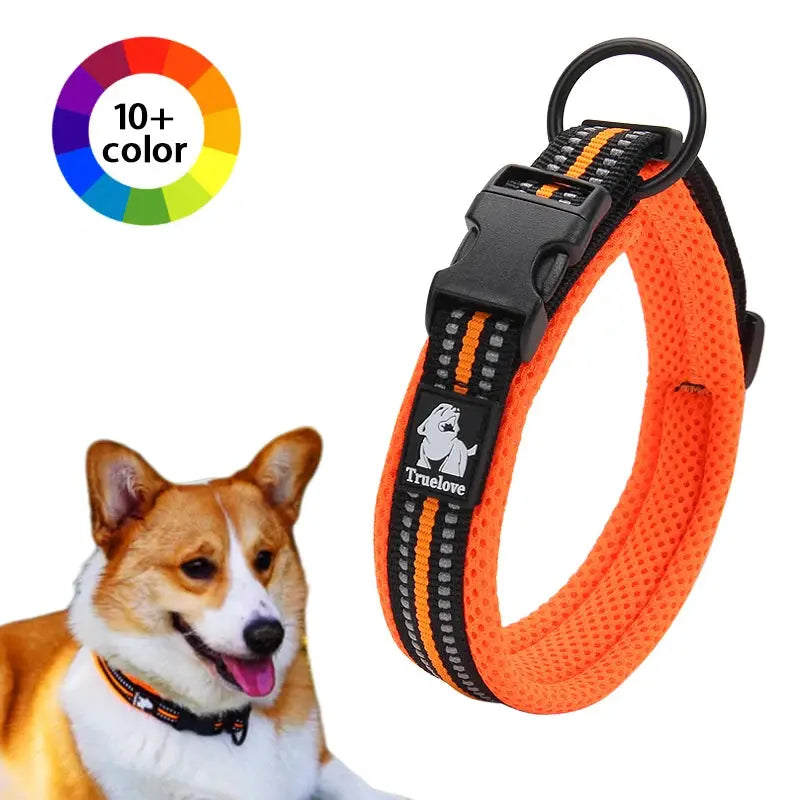
A common mistake is judging a collar by webbing alone. On both materials, the stitching and hardware usually fail first. Look for bar-tack or box-X stitching at the D-ring and buckle stress points, a D-ring that is welded rather than bent wire, and a buckle with a firm, audible click. The Winhyepet Reflective Padded Nylon Dog Walking Collar shows what heavy-duty construction looks like in practice, pairing thick webbing with aluminum hardware and a zinc alloy traction buckle.
Expected lifespan, realistically:
- Hemp, well made, dry-climate dog: several years with monthly checks and prompt drying after wet walks
- Hemp, frequent swimmer: shorter, because repeated soak-and-dry cycles fatigue the fiber
- Nylon, well made, active dog: several years; watch the webbing edges and the buckle
- Nylon, budget build: often one to two seasons before fraying or hardware failure
Watch out: a frayed edge or a D-ring that has started to spread is a replacement signal on either material, regardless of how new the collar looks. Webbing strength means little if the ring pulls free.
The Benefits of Hemp Dog Collars for Comfort and Sensitive Skin
Hemp dog collars earn their following among owners of sensitive-skinned dogs. It also breathes, so it does not trap heat against the neck the way a coated synthetic strap can.
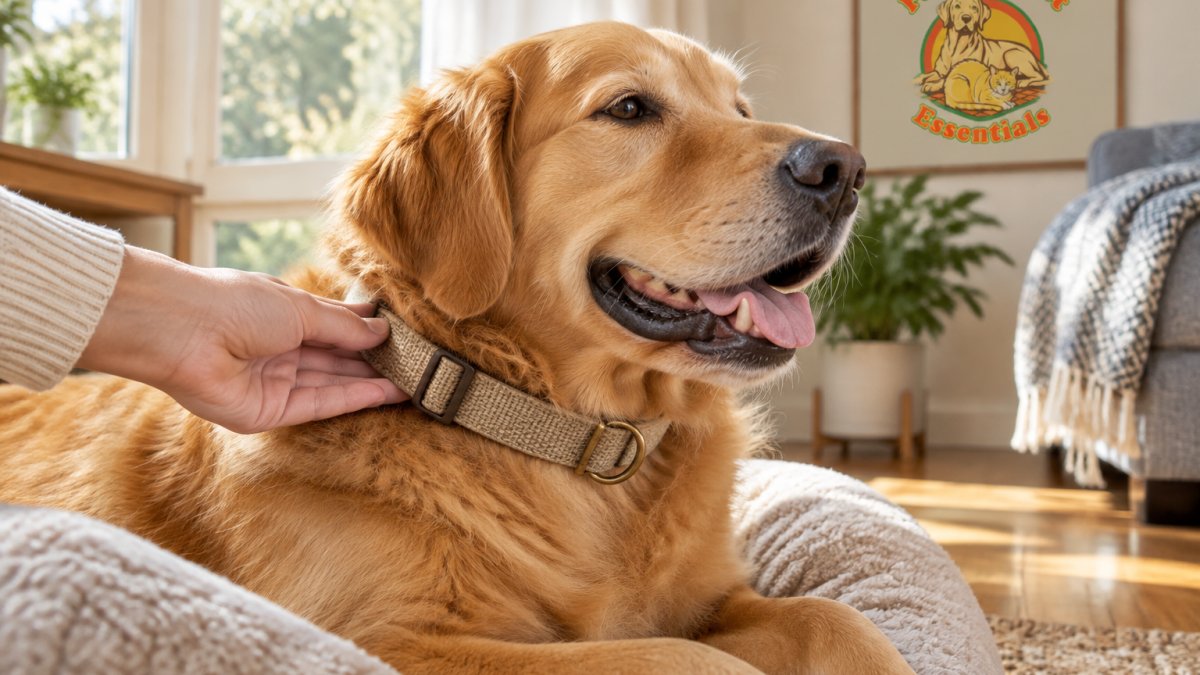
Softness matters more than most guides admit. A stiff collar rubs against the throat on every head turn, and that friction is what causes chafing and hair loss at the neck. Nylon stays firm unless it has padding, which is why padded designs are worth the small extra cost for thin-coated or senior dogs.
What most guides miss is that fit causes more irritation than material. A collar that slides or sits too tight will chafe whether it is hemp or nylon. Measure the neck, then leave room for two fingers underneath.
Breathability, Moisture, Odor, and Mildew Resistance
Nylon handles water better; hemp handles smell better. That single trade-off explains most of the practical difference between the two materials.
Nylon webbing repels water and dries quickly, which keeps it mildew-resistant in humid conditions. The catch is odor: synthetic fibers trap oils and bacteria from your dog's skin and coat, and that smell builds up over months. Leave a wet hemp collar balled up in a bag, though, and mildew can set in.
Watch out: a soaked hemp collar left in a closed bag or hot car is the fastest route to mildew. Dry it flat in open air every time it gets wet.
How to Clean Hemp Dog Collars vs Nylon Collars
Cleaning is where the two materials diverge most, and it is also where care decisions quietly determine how long a collar lasts. The routine differs by fiber, and getting the drying step wrong is the most common way owners shorten a collar's life.
Hemp collars. Hemp is hand wash only in most cases. Use lukewarm water, a little mild soap, and a soft brush on stubborn spots, then rinse thoroughly. Skip the dryer, because heat shrinks and stiffens the fiber. The critical step is drying: lay the collar flat in open air, ideally with airflow on both sides, until it is fully dry before it goes back on your dog. A soaked hemp collar left in a closed bag or a hot car is the fastest route to mildew, and mildew damage is permanent.
Nylon collars. Nylon is the easier material to maintain. Most nylon webbing is machine washable in a mesh bag on a gentle cycle, or you can wipe it down with a damp cloth for quick cleanups. Air dry it fully. Nylon repels water and dries quickly, which keeps it mildew-resistant, but the same synthetic surface traps oils and bacteria from your dog's skin and coat, so odor builds up over months if you only spot-clean.
A simple routine keeps either collar in shape and extends its lifespan:
- Rinse or wipe the collar after muddy or wet walks, then dry it before storage
- Deep clean every two to four weeks, more often for dogs that swim or roll in dirt
- For nylon, add a monthly deeper wash to break down trapped oils and control odor
- Check stitching, buckles, and the D-ring monthly
- Replace any collar with frayed edges, a loose D-ring, or a buckle that no longer clicks firmly
Watch out: never store a damp collar of either material in a closed bag or a hot car. For hemp, that invites mildew; for nylon, it traps odor that a single wash will not remove.
Fit, Sizing, Hardware, and the Hemp Martingale Dog Collar Option
Fit and hardware decide whether a collar is safe, not the fabric. A well-fitted collar sits high on the neck, snug enough that it will not slip over the head, with room for two fingers underneath. Measure the neck at its widest point and match it to the size chart rather than guessing.
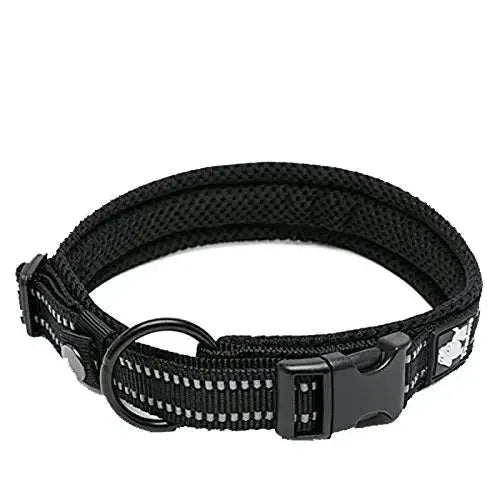
Hardware deserves a close look on any collar. A sturdy D-ring for the leash, a quick-release buckle that clicks firmly, and clean stitching at stress points are the marks of a safe build. The TRUELOVECN Adjustable Reflective Padded Dog Collar TLC5011 pairs a stainless steel D-ring with breathable mesh padding and reflective material, a sensible setup for evening walks.
For dogs that back out of standard collars, a hemp martingale dog collar is the fix. The martingale design tightens gently when a dog pulls, which keeps the collar from slipping over the head without choking. It suits narrow-headed breeds and dogs that have escaped flat collars before.
Environmental Trade-Offs Across the Product Lifecycle
Hemp is often described as the greener material, since the fiber is biodegradable at the end of its life and a collar that lasts years keeps waste out of landfills. The honest caveat is processing: dyes, finishes, and hardware affect a collar's real footprint, so a poorly made hemp collar is not automatically the greener buy.
Nylon is petroleum-based and does not biodegrade. It earns environmental points only through longevity, since a durable nylon collar that lasts for years still beats a cheap one replaced every season. If sustainability drives your choice, look for undyed or natural-finish hemp and metal hardware over plastic.
Choosing the Right Collar for Your Dog's Lifestyle
Match the collar to the dog, not the trend. Hemp suits everyday wear, sensitive skin, and owners who want a natural, biodegradable material. Nylon suits swimmers, mud lovers, and budget-conscious buyers who want easy cleaning and a wide color range.
Use this decision framework:
- Sensitive skin or allergies: hemp, for its hypoallergenic fibers
- Daily swimmer or beach dog: nylon, for water resistance
- Dog that slips collars: hemp martingale for secure control
- Tight budget: nylon, for lower upfront cost
- Eco-conscious buyer: hemp, for biodegradability
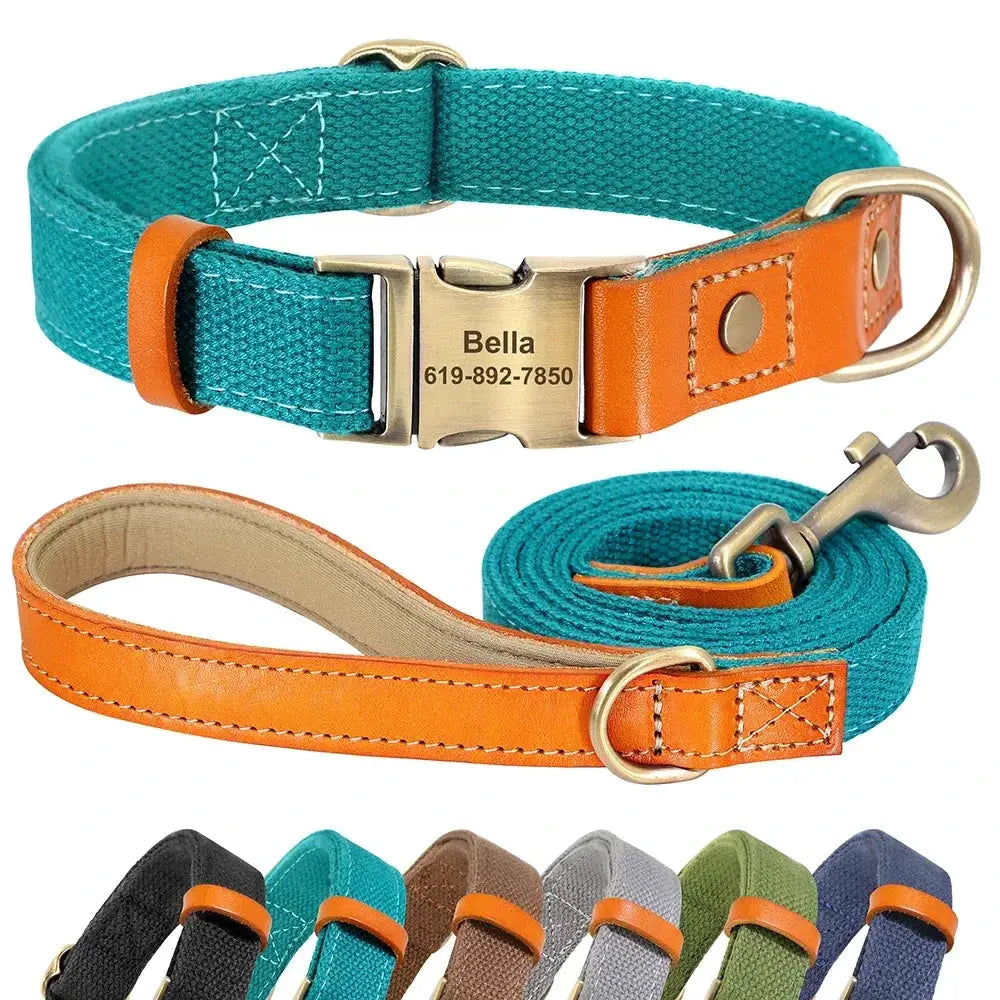
For a personalized everyday option, the Pet Artist Personalized Dog Collar & Leash Set with Engraved Name Tag adds an engraved name tag so identification stays attached without dangling tags. If you are also working on manners at home, our guide on how to train a dog in an apartment pairs well with a well-fitted collar.
Picking between hemp and nylon gets easier once you match the material to your dog's daily routine. At Furtastic Pet Essentials, we stock durable, high-quality collars across both styles, backed by fast, friendly customer service and a catalog built to simplify your pet care shopping. Browse our reflective and padded collars to find the fit, hardware, and material that suit your walks, and get started with Furtastic Pet Essentials today.
Frequently Asked Questions
Are hemp dog collars better than nylon collars?
Neither wins outright. Hemp dog collars have a natural fiber feel, while nylon collars are lighter and dry faster after swimming. Nylon collars are lighter, dry faster after swimming, and cost less up front. Choose hemp for comfort and smell control, nylon for water-heavy use and tighter budgets.
Do hemp dog collars smell less than nylon collars?
Construction matters as much as material. The Winhyepet Reflective Padded Nylon Dog Walking Collar has a soft breathable sandwich-mesh lining.
Is hemp durable enough for large dogs that pull?
For heavy pullers, check the buckle, D-ring, and reinforcement before the material label. The Winhyepet Reflective Padded Nylon Dog Walking Collar uses aluminum hardware and a zinc alloy traction buckle.
How do you clean a hemp dog collar compared to nylon?
Check the care instructions that come with your collar before washing, and air dry it fully before your dog wears it again. Wipe either collar down weekly and check stitching and hardware monthly.
Are hemp collars hypoallergenic for dogs with sensitive skin?
Fit still matters most: a collar that rubs will irritate any dog. Look for soft padding, rounded edges, and a snug two-finger fit, and introduce any new collar gradually.
