

How to Groom a Dog in a Small Apartment
Last Updated: November 1, 2026
Quick Summary
To learn how to groom a dog in a small apartment, control the space, noise, and mess before you pick up a brush, then run short, repeatable sessions in one dedicated spot. Brush two to three times a week for five to ten minutes, bathe every four to six weeks, and keep sessions under ten minutes at first.
- Pick one grooming spot with a non-slip mat and use it every time so the dog settles.
- Brush two to three times a week for five to ten minutes rather than one long weekly session.
- Bathe every four to six weeks and towel dry first to cut dryer time and noise.
- Trim nails every three to four weeks and check ears weekly for redness or odor.
- Groom mid-morning to early afternoon and keep sessions short to limit noise through shared walls.
Table of Contents
- How to Groom a Dog in a Small Apartment: The Full Routine
- The Dog Grooming Supplies You Actually Need in a Small Space
- How Often to Groom a Dog: Building a Schedule That Fits Apartment Life
- How to Keep a Dog Still While Grooming in a Tight Room
- How to Bathe a Dog in an Apartment Without Flooding the Floor
- Brushing, Nails, Ears, and Trimming: The Step-by-Step Order
- Noise, Fur, and Neighbor Considerations for Apartment Grooming
- Stock Your Apartment Grooming Kit at Furtastic Pet Essentials
- Frequently Asked Questions
How to Groom a Dog in a Small Apartment: The Full Routine
Learning how to groom a dog in a small apartment comes down to one principle: control the space, the noise, and the mess before you ever pick up a brush. Apartment grooming works best when you treat it as a short, repeatable routine rather than a big weekend project.
Below, we'll show you how to run the whole routine, from supplies to cleanup, without soaking your rental or annoying your neighbors.
Why Apartment Grooming Needs Its Own Plan
A house with a yard gives you slack, hose a muddy dog outside or let a wet coat air-dry on a porch. An apartment gives you none, so the plan has to carry the weight.
Three things make apartment grooming different:
- Space is tight. You need a spot where the dog can't bolt and water can't spread.
- Sound travels. Dryers and clippers echo off hard floors and thin walls.
- Cleanup is instant. Fur and water hit your floor, not grass.
A common mistake is copying a house-based grooming routine and hoping it fits. Build the routine around your actual room instead.
The Dog Grooming Supplies You Actually Need in a Small Space
The best apartment grooming setup is small, quiet, and stores in one bin. You need tools that do more than one job and fit under a sink.
Here's what earns its space:
- A brush and comb matched to your dog's coat type
- Nail clippers or a grinder
- Dog shampoo made for your dog's skin
A vacuum grooming kit can help with several tasks at once, pulling loose fur into a bin as you groom. The DishyKooker Pet Grooming Kit with Quiet Vacuum fits that role, with 16 adjustable suction levels, four guide combs, and a detachable 2L waste bin.

How Often to Groom a Dog: Building a Schedule That Fits Apartment Life
Here's a simple schedule to start from:
| Task | How Often | Time Needed |
|---|---|---|
| Brushing | 2-3 times a week | 5-10 minutes |
| Nail trimming | Every 3-4 weeks | 5 minutes |
| Ear check | Weekly | 2 minutes |
| Bath | Every 4-6 weeks | 20-30 minutes |
| Coat trimming | Every 4-8 weeks | 15-30 minutes |
Short-coated dogs need less brushing. Double coats and long coats need more. The key is frequency over duration: five calm minutes twice a week beats one stressful hour on Sunday.
How to Keep a Dog Still While Grooming in a Tight Room
The trick to keeping a dog still is to make the space boring and the rewards frequent. A dog that feels trapped will wiggle.
Try these steps:
DishyKooker Pet Grooming Kit With Quiet Vacuum And 5 Grooming Tools For Pets →
- Pick one grooming spot and use it every time.
- Put down a non-slip mat so paws don't slide.
- Start with one short task, then treat.
- Keep sessions under ten minutes at first.
- Build up slowly as your dog settles.
This is where desensitization helps. Turn the clippers on for a second, treat, turn them off, and repeat over several days.
If your dog struggles to stay put, the work starts before grooming. Our guide on how to train a dog in an apartment covers the calm-stay basics that make grooming sessions easier.
How to Bathe a Dog in an Apartment Without Flooding the Floor
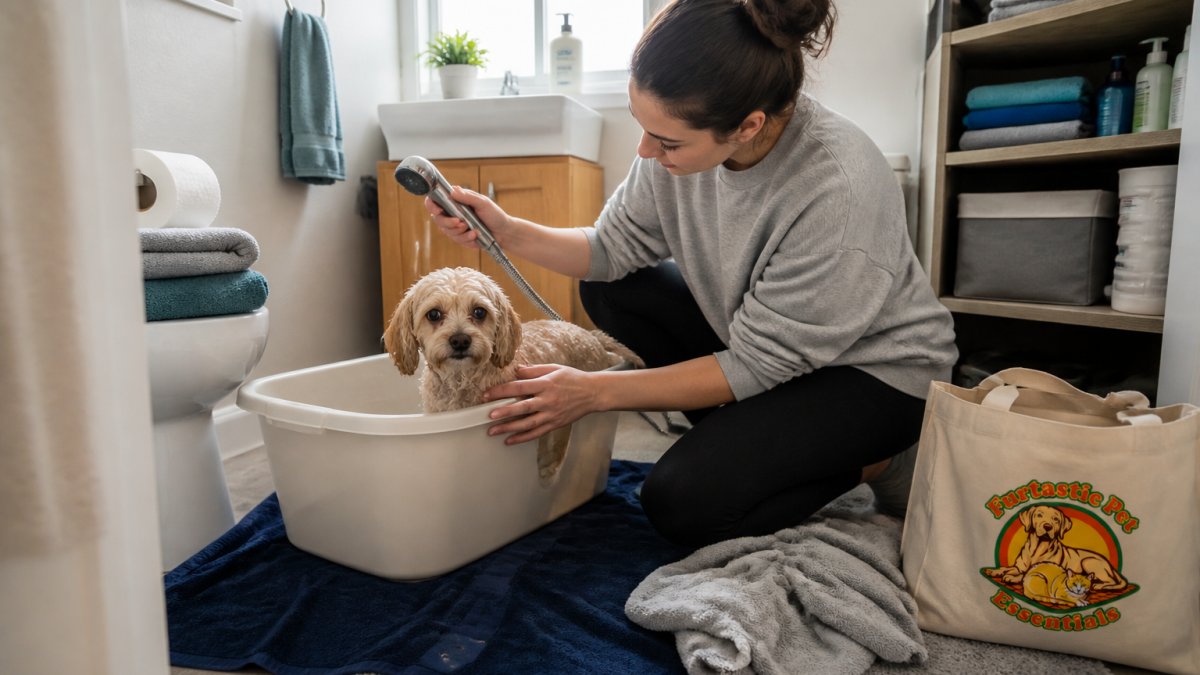
The safest way to bathe a dog in an apartment is to pick the right vessel for your dog's size and bathroom layout, contain water at the source, and dry the floor before paws hit it.
Choose Your Bathing Setup First
Most apartment bathrooms have a shower but no tub, or a tub too deep for a small dog. Match the method to the dog:
- Handheld shower in a walk-in shower. Best for medium and large dogs that can stand safely. Add a suction-cup drain guard and keep the spray on the lowest pressure that still reaches the skin.
- Kitchen or bathroom sink. Works for toy and small breeds under roughly 15 pounds. Line the sink with a non-slip mat, use the sprayer on low, and keep one hand on the dog's chest.
- Portable pet tub or deep plastic basin. The most flexible option for renters. A foldable tub stores flat and lets you bathe in the shower stall or on a tiled floor. Put a non-slip mat inside, wet plastic is slick.
Contain Water and Fur Before You Start
- Lay a washable, water-resistant barrier, a shower curtain liner, a rubber-backed mat, or old towels, over the floor around the vessel.
- Put a drain guard in the shower or sink drain to catch fur before it reaches the trap.
- Keep a second towel within arm's reach to wrap the dog the moment the bath ends.
The Bath Sequence That Keeps Water Contained
- Brush the coat out first. Wet mats tighten and become much harder to remove.
- Check water temperature with your wrist, lukewarm, not hot. Dogs run warmer than people, so water that feels cool to you is usually comfortable to them.
- Wet the coat with a cup or a low-pressure spray, working from the neck back. Avoid the eyes and ear canals.
- Lather dog shampoo, then rinse until the water runs clear, one extra pass beyond what looks clean, since residue causes itching and dull fur.
- Squeeze excess water out with your hands, then towel dry. Towel drying first cuts dryer time and noise.
- If your dog tolerates a blow dryer, use the lowest heat and speed, keep it moving, and hold it at least six inches from the skin. Stop if the dog pants, paces, or tries to leave.
Tailor the Bath to Coat Type and Dog Size
- Short, smooth coats dry fast with a towel and need the least dryer time, a good fit for a small bathroom with no window.
- Double coats (Huskies, Shepherds, Goldens) hold water in the undercoat. Towel dry thoroughly and expect a longer dry time; a damp undercoat is where skin problems start.
- Long or curly coats (Poodles, Doodles, Spaniels) mat if rubbed vigorously. Pat and squeeze rather than scrub, and detangle before the bath.
If your building has a pet wash station, use it for large or double-coated dogs; it is built for the water volume and drainage a small apartment bathroom is not. Otherwise, the basin or portable tub method works in almost any bathroom.
Brushing, Nails, Ears, and Trimming: The Step-by-Step Order
The right grooming order is brushing first, then nails, then ears, then trimming. Each step sets up the next, and the whole sequence takes about 30 minutes once you're practiced.
- Brushing and detangling. Work out mats before they tighten. Brush in the direction the coat grows.
- Nail trimming. Clip small bits and check the paw often. A nail grinder smooths rough edges.
- Ear check and cleaning. Look for redness or odor, then wipe gently with a cotton pad.
- Coat trimming. Use clippers or scissors for tidy edges and paw pads.
The 8-piece self-cleaning grooming set includes clippers and other grooming tools for at-home routines.

Noise, Fur, and Neighbor Considerations for Apartment Grooming
Quiet tools, smart timing, and fast cleanup keep apartment grooming from becoming a complaint. Sound and fur both travel through shared walls and common hallways, so plan around them before the session starts.
Cut Dryer and Clipper Noise at the Source
- Choose low-noise tools. Look for clippers and dryers rated in decibels; lower dB ratings mean less sound carried through walls. A vacuum grooming kit with a low-noise motor can reduce noise compared with some standard vacuums while collecting fur into a bin.
- Use the lowest speed that does the job. Low speed plus a longer session is usually quieter and calmer for the dog.
- Put a towel or mat under the tool. Hard floors amplify motor vibration; a folded towel dampens it.
Time Sessions Around Shared Walls
- Groom during the day, ideally mid-morning to early afternoon, when neighbors are most likely awake and out.
- Avoid late-night sessions and early-morning sessions on weekends.
- If your building has quiet hours, check your lease and schedule around them.
Manage Fur and Water in a Rental
- Vacuum or sweep immediately after each session. Loose fur works into carpet, baseboards, and heating vents fast, and once it is in the carpet it takes repeated passes to remove.
- Use a drain guard and a washable floor barrier during baths to help catch fur and water.
- Keep a lint roller by the door for shared hallways and elevators.
Keep the Space Safe in Tight Quarters
- Put down a non-slip mat wherever the dog stands, tub, floor, or grooming table.
- Keep cords, leashes, and dryer cables off the floor where a wet dog can tangle in them.
- Store tools in one bin with a lid so fur and water do not spread between sessions, and so the dog cannot reach clippers or scissors when you are not watching.
A vacuum grooming kit that pulls fur into a bin cuts the mess before it spreads and reduces the vacuuming that follows. The HiMISS grooming kit with vacuum suction features a low-noise cyclone system and a detachable 2L dust bin. Pair it with a drain guard, a washable mat, and a lint roller, and no one notices the grooming happened.
Stock Your Apartment Grooming Kit at Furtastic Pet Essentials
Grooming a dog in a small apartment is really a storage and timing problem, and both are solvable. Pick one spot, keep one bin of tools, and run short sessions on a steady schedule.
At Furtastic Pet Essentials, we stock grooming supplies for everyday pet care. You get a comprehensive catalog, fast and friendly service, and products chosen to simplify pet care.
Frequently Asked Questions
What supplies do I need to groom my dog at home in an apartment?
Start with a brush matched to your dog's coat type, a comb, nail clippers or a grinder, dog shampoo, and absorbent towels. A vacuum grooming kit can collect fur into a bin while you groom. Add a non-slip mat for the tub and a small container for water.
How do I keep dog hair from spreading during grooming?
Groom on a washable mat or an old sheet you can bundle up and shake outside. A vacuum grooming kit is designed to pull fur into a 2L bin during grooming. Brush before bathing rather than after, since wet fur clings to surfaces. Wipe down hard floors with a damp rubber squeegee afterward, and keep a lint roller by the door for furniture touch-ups.
Where should I bathe my dog in a small apartment?
The bathroom tub or a shower stall works best because it already has drainage and a door. If your tub is too deep, set a plastic storage tub inside it to raise the floor and reduce splashing. Line the tub with a non-slip mat so your dog feels steady. Skip the kitchen sink for anything larger than a small dog, and never bathe in a carpeted area.
How can I make grooming less stressful for my dog and my neighbors?
Keep sessions short, use treats and calm praise, and pick a quiet room away from hallway noise. Choose tools with low-noise motors; the DishyKooker kit uses a suspension motor and double-cavity construction to reduce sound. Run clippers briefly while your dog eats so the noise predicts something good. If your building has quiet hours, groom outside them so a startled bark does not become a complaint.
